The Torture Rack
Written by admin
Cracking, stretching and snapping, sinews become joined by annihilation, pouring crimson rivers and tears over the wood. The body torn, having been pulled in maximum tension–facilitated by the binding of the extremities to the two ends of the rack. This torture is one that has existed before and after its material invention and medieval practice, as in my experience it serves as imagery for the bifurcation of the social body into a symbolic binary. The rack may happen upon and emphasize real sutures and contours, just as well as imaginary ones, but what is more certain is that every flesh fragment subsequently highlights gaping sores, gaping pain.
The torture rack has no traceable origin and history for the individual, but operates like a ghost that possesses and ensnares the indomitable blossoming of life. Yet I have felt each micro-tug and macro-pull of the many fibrous tendrils shaping the trajectory of the ballistics of my body outside the womb. Because the torture rack is but an apparition, a ghostly force, visible only at the very moment of rending, it had been unrecognizable throughout my life history. In retrospect, I may take account of each rope that wrapped itself about me from early childhood until now, for the final turn of the wheel upon my bones.
Rope 1 (1995-2000): “Mama’s Boy”
The first rope to fasten my extremity can only but be the first of memory, one tied mildly and loosely and only faintly felt. The scene of the knot stands as a collection of fixed but tangled colorless images vivid only in language:
The office of an old-school psychotherapist, one I had perhaps known once before or came to know some moment after.
A hand holding and pressing my own as dictation occurs.
An inscrutable diagnosis of “too much attachment” forms an amorphous miasma, speech in jitter throughout.
Artifacts of concern about successful boyhood are scattered across, juxtaposed, consuming the celluloid.
Restoration of this record is only to be found in its framing in and by the future as a space or location, to satisfy eternity’s pleas for coherence. And my future says that the combination of concerns about “masculine” development and the attachment diagnosis, likely means the former was justification for the latter as opposed to being an independent concern. The attachment may or may not have been excessive–this neither record nor prophesy can show–but insofar as excess is measured by the ruler of successful or achieved boyhood, the underlying diagnosis was really about masculinity first and foremost.1 For the diagnostician, the potential of the body was a site of fear, while its actuality was a site of comfort.
The psychotherapist’s diagnosis in other words may as well have been a diagnosis of the fears and anxieties of a culture as a whole instead, within which I had been woven. After all, masculinity, or femininity, at that age were more distant than the breast of my mother. But there is insistence despite that revelation that nonetheless gender’s future “existence” gives it a present concrete reality–renders it a brute fact nothing to do with fear of ambiguous flesh and management of crooked futures. What would have existed for my infancy and early childhood is the patterned material actions of the bond between guardian and guarded, without the specificity of the bodies that hide behind or under these actions and bonds. In such a state, provided no precocious exposure, there is only a single speculative universal gonad: that which belongs to my own body.
Every diagnosis comes with a prognosis, and every merit-less diagnosis comes with a cruel prognosis. The psychotherapist demanded that spontaneous, uncontrolled or unprompted affection from my mother cease immediately and, given my age, inexplicably. Seemingly the child that I was, was not to take for granted the independence expressions of affection had from my own existence: that they may exist before and after me. Instead, such external phenomena were to be taken as inherent effects of my self-initiative. Spontaneous and unprompted and unasked expressions of love must simply be regarded as impossible, or otherwise as an extension of my own action. At the stage of development in which a child needs a default scaffold and template of human relations to precede them via their parents, I was put in a position to acquire from, and thereby model to, my parents the requisites or nature of relationship. That is, I had to demonstrate knowledge and experience of relationships in advance of having a default template inculcated to me by my parents. And yet, inevitably, a default template was, paradoxically, inculcated: the idea that one is in sole control of other’s expressions and ideas of love, such that if one lacks it, one has simply failed to develop the skills to achieve the love of others. And yet, love from others is clearly a matter of others’ volition, as anybody experiencing unrequited love can attest.2
Implicit in this prognosis, then, is that to be a successful boy means implicitly believing that others’ choice to love, and what love as such means for others, is an immediate effect that is a function of one’s behavior. Boyhood then means taking responsibility for others’ love and what that love means to those others, for it is only by doing this that the world of human relationships can open up to and for the child designated a boy. The opportunity of or for relationship is made available to the boy by his social initiative, and otherwise either is perceived to not exist (or to not be “real”). After all, if it it were possible for love to be real and independent of his initiative, the child would need to learn this by the resistance an independent source of love provides against the child’s actions (such as that of the mother or father in infancy / early childhood). The inability to perceive love that can be simultaneously real and independent of oneself leads to a tendency to project one’s own love on the other as an established fact in the very process of pursuing it. It also makes it difficult to fall in or stumble into love, but instead one fulfills a “love” strategy, a way to entice another into our personal theater of love. One could speculate that instilling this subtle aspect of normative masculinity is why the “boyhood” prognosis requires encouraging the withdrawal of spontaneous, unprompted parental expressions of love.3
Yet, one experience of this, even if this experience reverberates across the sea of life experiences, may not be enough to cause turbulent and stormy oceans. Anything that may have resulted from putting the psychotherapists’ prognosis into practice was insignificant, merely a small buoyant pebble strewn across the puddle surface that failed to make sufficient waves in my life. Thought it constitutes a deep, defining plunge, this prognosis and my mother’s minimal implementation of it was a small splash–or at least was able to remain so at the time. The question remaining regarding this experience is: what other events served as pebbles that on collision modulated the amplitude of these waves rippling across the puddle of my life history? The rest of the record to follow–the other rack ropes to be compiled–will be instructive. Meanwhile the newly emerging question is: while the psychotherapist presumed for my childhood the goal of being a boy and later a man, how did the attempt to shape my trajectory actually impact me in the long-run?
Rope 2 (1995-2000): Mosaic
The torture rack never consists of pain or suffering right away–what it does is it sets up the conditions, and then gradually increases the opposing tensions. The mild compression may as well be neutral, and even occasionally pleasurable during moments of relief. The rope that is to be tied to the rack constricts the circulation of bodily signs, positioning the body in awkward and artificial extension upon the rack which frames it. The frame which contorts and molds my bodily mass, can be described and expressed by a tangle of threads that held or disrupted the reproduction of my own life.
For one, the fatherly absence and motherly presence in the latter years of my early life lead to my perceiving my dad as a kind of general voice without location or specifiable place. In this way, my father was omnipresent through his absence–individual items and artifacts sent to me or my mom, full of language and imagery, aggregated into the omnipresent fatherly voice. They formed a kind of scattered and fragmented body. With no one to concretely and physically attribute this voice to, all those who were cast, or cast themselves, into the masculine role were the potential father. The materiality of my father occasionally evidenced itself later when he would visit again from the United States. In this way, the father was a kind of ghost–an abstraction whose potential incarnation was universal but whose relation to me was particular, the latter sometimes allowing the individuation of the former as an apparition. Inversely, motherhood for me as a child was not as easily detachable from the particular activities, practices, and so on of the person that had been directly raising me. My earliest learning was bound to the refining feedback loop comprised of the particular behaviors modeled by her and my own indiscriminate reactivity. These threads connecting me to mom and dad, also formed an unconscious structure involving the associated signifiers.
Insofar as the signifier of “father”/“man” or “mother”/“woman” embedded in particular familial relations inform the child’s understanding of “men” and “women,” one could say the precedent was set for me to experience or perceive masculinity as a kind of boundless jurisdictional space which can be inhabited, and to experience or perceive womanhood as a bounded place or location–an orienting landmark–that can be traveled. One was a geography, while another was a cardinal direction.
There is another scene that comes to mind, that serves as a compass orienting me in this landscape of reminiscence: I am seated, while someone is also seated to my side, while others stand. Conversation reverberates–conversation interrupted: my legs are folded. More than once I have folded my legs. But this time it became special–disruptive, transgressive. This aged celluloid capture of a summation of my various leg foldings is fixed and retained due to an additional ingredient: a reprimanding corrective of my comfortable contortion. A grown man–maybe even my own father–felt fit to correct how I had come to cross my legs. This indictment of my cross-legged stature stands as a metonymy for the indictment of the bundle of gestures that my mass of flesh had mastered and instilled into its shape over time. It cannot be that the way I crossed my legs had been the only gesture I had in my repertoire by then. I remember the vehemence and stubbornness that met my own resistance to demands to change a gesture that came comfortably if not naturally to me, a vehemence and stubbornness that I could only escape by placating it.
It is not clear how I had come to be in this mnemonic celluloid image–what was outside the stage of this theater. What is clear is that before this moment, I had grown up primarily with my own mother, as aforementioned, yet also secondarily with a neighbors’ sibling children. No pathway is clear, but events are: my playing with dolls with the neighbor girl, honing communication, imagination, and emotional understanding with every instance; my rejection of toy trucks, planes, etcetera, for the open-ended creativity of play-doh and drawing as I observed my mother’s artistic endeavors; my frequent upset and frustrations when playing with the neighbor girl’s brother, diminishing my patience for more competitive games involving rivalry. While the female sibling has achieved a more prominent place in my past, I can only speculate I had borrowed mannerism, gestures, preferences, from both. I even at some point later on (post-2000), volunteered to try wearing my mom’s high heels, which my parents only allowed once to “get it out of my system.” The resulting amalgamation must have been awkward enough that it became too visible on my own body to escape scrutiny and policing, which would only increase from that point forward–not as much from my parents, as from future peers.
With another relaxed hand of mine fastened by rope onto the rack, my fate of torture had by that point been sealed.
Rope 3 (2001-2006): Suspect
By this time, my parents had brought me with them to the United States. I was inducted into the US public school system, which began my arduous journey through a wasteland of aggressively enforced conformity. Until then, crying was no source of shame or lack of safety. Crying was simply a neutral phenomena–something that sometimes happens, like afternoon rain after a humid morning. It was in US public schools that crying revealed a sensitivity that itself required punishment from fellow classmates. A core memory that documents this process, is the one wherein I had been sitting in the middle of a public playground, attached to the school. My eyes were teary, my vision blurred by the dew resting on my lashes. The source of instigation is unknown, but what is clear is that the release and relief of pain that my eyes were serving had itself become a source of further hurt–the playground kids further laughed, teased, threatened. An activity that would bring me back to baseline, only grew in frequency and duration exponentially through the catalyst of further and more intense bullying due to that very activity.4
I remember I sat there, and defiantly preferred the solitude of the bench as I looked onward from the outside. This experience, in which boys are deprived of the equilibrating tools native to their body, is common enough. The compromise with danger due to crying, was that crying became a private affair, something deferred and enclosed. The ability to cry was tied to the ability to socially disconnect. Eventually, so too was the entire ability to feel. Any attempt to bridge the divide between the social and the emotional was then a conspiracy of exposure to threat. Even the closest friendships required defensive posture, and aggression and affection overlapped as one. In my inherent sensitivity, I preferred to be alone than to abide by this culture–to hide, in one way or another. I hid so well, I slowly became invisible to myself.
While much of this treatment came from other boys, there had been a fawning complicity or indifference from the girls that was notable to me. While I was at the time forced to hide myself, my move to hiding myself was also itself invisible to bystanders and onlookers. It is true that bystanders and onlookers had been both boys and girls, men and women, but in my childhood mind I already either expected less than safety from other boys at worst or similar hiding by and invisibility from other boys at best. The result is that the reaction or response from girls in particular had stuck out to me. I would not have been aware at the time of the complex motivations among girls, but at minimum I expect that among these reasons would have been their perception that my perpetrator and I were but one and the same. I deserved to be left alone to hide because my body looked like those of the very boys I fell victim to. Insofar as these bullies I suffered were the template of what boys were, being a victim of them as a supposed boy was something I had done to myself. Not only was I to blame because of the boyhood ascribed to me, but any attempt to cope with this reality on my own became but further reason that the “boyhood” which surrounded me at all sides was normal and okay. I was not enough of a girl to find alternate community among them, but I also was not enough of a boy to aspire to be those that played with and trampled on my sensitivity despite my adapting to the environment they had created.
By late elementary, I had already changed to a private parish school. I thought to myself I had a clean slate, to make a good impression, perhaps even without having to fully hide myself. Alas, during the first day of introduction, one of the girls–I would imagine with full awareness of how the boys would react–had rhetorically asked in full view of the rest of the classroom if I was “gay,” in effort at derogation. Before my first school-year had even begun, with this one incident a permission slip had been handed to my fellow classmates to recreate everything I had already gone through until then. But worse, because now, I felt more trapped and suffocated than ever before. While the boys began harassing and bullying me evermore incessantly with every year at this school, the girls were often able to exploit the abusive rivalry among the boys by simply uttering the right words and making the right declarations. Usually, this was done through the weaponizing of extant homophobia and the usage of friendships or relationships to create wedges based on boys’ extant shared or disparate insecurities. The fawning complicity or indifference I had observed among the girls in my previous school had expanded into active participation in later elementary school, albeit in a form distinct from the boys.
None of this is to say the boys were not responsible for their own behavior, but, insofar as at the time they too were as much children as the girls were, the delegation of responsibility is largely a moot point to begin with. Instead, what is important is that the behaviors of the boys and the girls at the school mirrored a version of the Mutt and Jeff technique.5 Both were engaging in behaviors that had the same function even if unwittingly: pressuring and shaming me into mutilating my personality until it fit a cookie-cutter dysfunctional mode required or demanded by the mechanisms of society. This had increased clarity for me after my self-negligence was not taken by my relatives as a sign to listen to or get to the bottom of my suffering, but instead as needing dissuasion through dangling of the prospect of girlish attention. The irony is that even resistance to the bilaterally enforced pressure and shame still leads to some kind of dysfunction one way or another. That is, one way or another, my development of self was being curtailed, impeded, and distorted. Nonetheless, at the time, I more often hung out around, and with, the girls at this school despite their own indirect involvement in the bullying and harassment. With these girls in particular, the harassment began to border on sexual harassment in the closing years of elementary school, as they tried to force kisses on me and constantly called my house. They feigned friendship throughout, and yet, in a way, they were nonetheless friends. They were the ceiling of safety, comfort and closeness I could find despite it all. They were the good cop.
By this time, not only was masculinity a geography or jurisdictional space and femininity a landmark or cardinal direction within my psyche, but both as external social realities I had begun to perceive as enmeshed within a larger system of control. My experience had been that femininity simply, for better or worse, negotiated a path through the disciplinary territory of masculinity.6 By this point it became clear that there was something about me that was perceived as feminine, and this femininity was seen as an aberration for someone with a body such as mine. And yet, I had still been hopelessly forging a sense of self, a solid identity, such that at this stage of my childhood–just as a I had absorbed a mosaic existence of sisterly and brotherly behaviors, mannerisms or gestures–I too had come to set myself against both girl and boy. Trapped between good cop and bad cop as a result of how my body was perceived and treated, I could only flee within my own mind by rejecting both as any lens through which to see and view my body and within which to position my status in society. This simultaneous diffusion across the binary, and ejection from it, meant that I developed a detached and distant relationship to that body with no particular attachment to boyhood beyond its utility as an interface. My body simply receded into the background, and I preferred not to be directly confronted by it. I disliked having to see myself in photographs and videos, as the visual form comprising my solid matter felt foreign to the floating camera viewpoint I experienced myself as. Even mirrors could feel uncanny if I paid too much attention.
The good news is towards the end of my career at this parish school, due to my having a full public breakdown in which I threw around and ruined property, bringing the final attention of the school staff and the shock of my peers, my bullying had largely diminished into a low-grade simmer. But it was too late. I did not accept apologies or attempts to reconnect from peers because they lacked reliability. Instead, I burrowed myself in books and literature. That I suspect its partly my perceived nerdiness that likely lead to all the homophobic bullying in the first place, and partly my naive formality and good faith that lent opportunity for me to be taken advantage of, renders this retreat into books and academics an ironic coping strategy.
Regardless, this is the rope that had fastened its final knot at a different extremity of the rack upon which I lay, the tension from my left wrist to my right ankle having become a perceptible source of muffled pain. I had not not only lied down across the divide of the rack just as I had across the divide between phallus and flower, but in addition struggled against the polarization suspending the power and free motion of my body. In this strife I would remain for ages, enduring by numbing myself to the body.
Rope 4 (2007-2009): Toy Soldier
For middle school, I was forced to change schools as the previous school I’d been in served only elementary school grades. This school, too, was a private school, albeit specifically a private Catholic Jesuit all-boys school. It was unique in its requirement that students attend a summer camp for around a month in-between academic terms. This additional rope upon my body, ensnaring my freer leg, represents my experience at this camp as paradigmatic of my developing (or underdeveloping) sense of self. In unprecedented fashion, I was to be isolated with adults, tucked away from my parents, while constantly surrounded by peers. By the time I had started attending this school and its camp, my invisibility had transformed from purely reactive and accidental to proactive and deliberate. I became an extremist in my practiced reticence and silence. The strategy was to remain unbothered by depriving fellow peers of ammunition. The cost was foregoing my lips, vocal chords, tongue–foregoing my body–as an avenue of self-expression. All it had done in the end was encourage others to escalate their attempts to pry me open. I enticed curiosity that pulled evermore attention to me. The kids were easier to give up, but at the point when their surrender was universal and total, the adults would then step in to intervene.
Even among the camp counselors, there was but one that was incessant. My executioner, the master of the torture rack. Lets call him TJ.
I soon learned that my ambivalent striving for total social invisibility resulted in a paradox of increased attention that could only be resolved by the occasional intelligible movement of air and breath past my lips–movement that, like the wind of a tornado, would eventually blow others to greater distances away from me. Though this camp counselor had broken me only slightly ajar, even a small crack in the door only lead to the revelation of a gun pointing at the world–that being an embodiment of fight and defiance. When I could not afford to be quiet, I was loud. Something that TJ apparently took as a challenge. After all, TJ seemed to think that in counseling a camp of boys, he was militarily training a cadre of child soldiers, exemplified in his drill sergeant shouting and denigration at the tiniest of imperfections.
In particular, I recall that one day when I had only started attending summer camp, TJ woke the entire cabin of kids up with aggressive and loud shouting in the morning. He would swerve around the aisles of the cabin like an overgrown snake, hissing disdain when disappointed at the state of folded clothing upon our shelves. And yet these dramatic reactions to slightly mis-folded or wrinkly articles upon a given shelf was not enough for him. In the process of calling us names and yelling expletives, he not only would have us fix that clothing in front of him, but, especially when met with even an inch of resistance, would grab and throw all of the given kid’s clothing onto the ground and off the shelf only for the kid to pick up and refold it. Our possessions as kid were in effect treated like trash, and kneeling to pick up, dust off, and then fold that clothing was an erasure of dignity. Deliberate humiliation was not at all a secretive hobby of TJ. This was a morning ceremony. Albeit a foggier mental image, I even recall a moment in which TJ had whacked either some food, snack or candy from one of the kids hands only to tell them to eat it off the floor if they insisted on eating or stashing food or on refusing to clean it off the floor. I doubt he had expected any of us to do so, but rather the suggestion simply had been another form of humiliation and degradation. He often played “pranks” like making us drink nasty concoctions of condiments and spices spun in water if we wanted seconds or thirds in the cafeteria–sometimes even force it on us just for the sport of it or as punishment.
To the degree that he took me as a challenge, TJ had special methods and rituals of humiliation for me. Uniquely, his yelling at me was an attempt to chip away at me until my defiance and fight was broken. With this in mind, he once had decided to punish me–for what I do not remember–by commanding me to run laps outside of the pool during swim period. While I ran indefinite laps back and forth, feeling the prickliness of the grass whenever I reached each end, he made sure to make me worthless. My ego and esteem had only been able to survive this process, albeit not unscathed, through the editorialized silence of his screams in the cinema of my mind. But persisting under the dead silence of his alternating spittle-laced lips and vulgar, contorted face, is my own intuition of the underlying theme: my being a weakling, a wimp, coward, sissy, failure. That he was going to push me to my limits until I dropped. All characterizations done in public view of the entire group of boys. Dehydrated, sweaty, and weakened, I stumbled onto the ground, desperate for breath. This kind of ritual punishment seemed reserved for me, as the only other time it had occurred I had been made to run around our cabin, bare-foot, in the middle of a drizzling night. This, after his frequent scaremongering stories warning us of potentially encountering a bear had we decided to exit the cabin in the middle of the night.
Another incident, one that is crucial as a summation of my entire existence at summer camp, is when during pool period TJ had lost patience with my fear of swimming in deeper water, to the point that he placed me in a tight hold, and forcibly dunked my head underwater, indifferent to my flailing and twirling to attempt escape, only to pull my head up from underwater to tell me to stop flailing, and dunk my head down yet again. The repeated dunking and undunking continued, until during another instance of underwater panic he proposed a trade: he’d let me come up for air provided I finally stopped moving. And so, eventually, I did. He had trained my nervous system to respond to danger and stress with passivity. To freeze under perceived threat of death. And in a way, it is as if I had indeed died. In becoming stiff and stale like a corpse, I had survived. I learned to give up.
Beyond invisibility protective of my “feminine” sensitivity, the remaining avenues of its expression via the anger of defiance and rebellion had transformed into a stillness that absorbed (public) humiliation as an inherent background condition of my existence. My binding to boyhood had by then became equivalent to my being ensnared in games of mutual humiliation that tested or otherwise enforced a pecking order, yet at the same time the ultimate enforcement of this boyhood through abuse had only further produced in me a passivity that culture often attributed to femininity. Every day since I had awoken in the summer camp cabin, trapped in the same space as TJ, yet free of all of its walls through the power of my mental escape and distraction. My already existing tendency to find companionship in the undead–authors as represented by the cultural artifacts and media debris abandoned by them–was reinforced even further.
Beyond his rituals of humiliation, TJ had inadvertently taught me enough about masculinity for me to gain a deepening sense of alienation from it just as I was often pressured to perform it. Upholding my alleged boyhood meant pouring energy and work into sustaining cognitive dissonance resulting from accepting ascription as a boy while also being antagonized by the ego-dystonic schema my psyche had been forming around boyhood and masculinity. My already existing ambivalence towards the binary of girls and boys, men and women, had to then contend with the more hostile skew I had been developing towards the boy or man I was supposed to become through these processes of mutilation of self I found myself caught in during summer camp. In the context of this designated target, the binary of boy and girl was simply a system meant to guide the requisite trajectory, like the split winds rubbing up against the contours of a bullet.
TJ felt righteous in his endeavors. I remember during the morning summer camp ceremonies, in which each cabin of kids would gather on the field of grass into single file lines, in parallel with each other, camp counselors would sometimes take a crack at motivational speeches that were to set the tone for the day as a whole. During one of these morning ceremonies, TJ deigned to introduce and discuss the concept and topic of tough love. The speech seemed more a means for him to rationalize his behavior to himself, while at the same time revealing an ideal of homosocial male relationships that was ambient in everyday ideology: paternalistic cruelty wherein self-actualization “as a man” or “as a boy” required a zero-sum power struggle.7 In another occasion, one of the rare moments he had seemingly been made to apologize for something in front of the entire group of kids, he instead took the opportunity to re-litigate his own troubled past, casting his resulting behaviors as a model of true and honest engagement with reality and the bundled pains and hurt as necessities for realizing the “naked reality” that justified this engagement.8 The entire time that he spoke, he held a hunting knife, ending his speech by stabbing the ground. After he had concluded by declaring he has since changed as a person, I remember telling him, I didn’t think he had.
That said, summer camp wasn’t all just TJ. Inevitably, bonds with some of the boys at summer camp concurrently formed. Two of these in particular were most meaningful: a “class clown” personality that had synergy with my trouble-making during academic terms (henceforth CC), and a closeted gay boy that allured me in his deviation (henceforth GB). Neither of these could boast of emotional closeness or true intimacy, especially after my spiritual death at the hands pf TJ. But, in their own ways, they either acted as respites from my trauma-laden days at summer camp or opened up avenues of compromised, anxious intimacies that otherwise I perceived as foreclosed within the binary of “girl” and “boy”–a binary itself constituted within the socialization of a particular formation or structure of heterosexual relations. The consequence of my relationship with CC then is that the viable and accessible avenue of passing safely as a valid member of boyhood within this formation had now become taking on the homosocial role of the jester, whereas the consequence of my relationship with GB was the prescient realization of a kind of sexual indifference as well as an inability to relate to gay boys’ and mens’ take on masculinity.
Rope 4 (2010-2015): Drifter
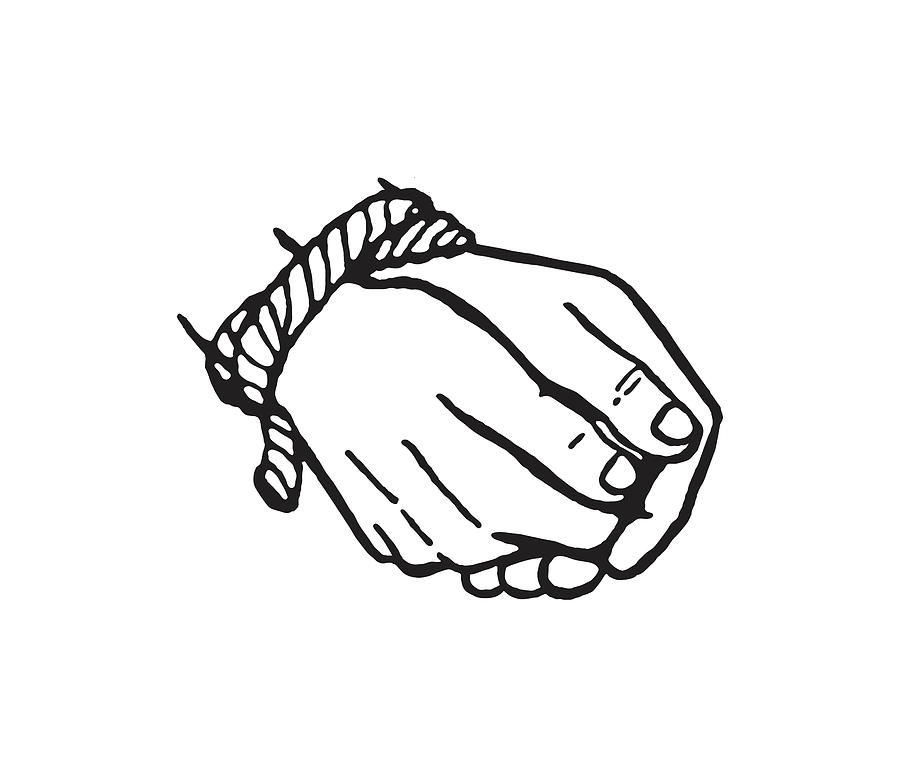
As the fourth rope had begun to squeeze on my left ankle, my mind roamed and daydreamed in anticipation of the final rupture of my flesh by the executioner. While TJ had by this point disappeared from my life, and GB and CC had been left behind and forgotten due to the emotionally withdrawn nature of my relationships with them at the time, his traces in my psyche and upon the wheels of the rack had continued to avidly haunt me into high school. Again, a pattern repeated: I had treated the start of high school as a new blank slate, and similarly kept a reticence that sought to avoid forging friendships. Again, as usual, someone managed to break through.
Luckily, my time in this all-boys high school had not been particularly eventful. My detachment from my peer relationships made it impossible to be pulled into any particular cliques, consequently leaving me floating and sliding past the blurry perimeter of various groups. Any of the attachments that I had at the time were primarily a consequence of others’ proactive effort at maintaining periodic engagement with me. If anything, these relationships were most of all justified by others’ personal interest in my mind, as, by this time, I had already buried myself so deeply in books, encyclopedias, and intellectual discussions, that by side-effect I had developed an early, divergent vision and perception of the world, albeit its communication and application and understanding often sabotaged by my own developing social neuroses. For, at the time, words were but a blade of protection from others unnecessary hypocrisies and explosive incoherences, as well as a tool of disrobing the force behind the curtain that is the flesh of the tongue. I was rhetorically ruthless and destructive of all possible viewpoints, as any group could claim me and hold me to their own failures and fallibilities. Meanwhile, my body remained under the living scripture of my speech, blocked from the sunlight of communication and obscured in location within the sprawl of words. Excitement and elation and joy–even optimism–were themselves threats to my sense of safety and security if they had any inkling of expressed passion and intensity, as they were omens in their outward appearance by the same measure they attempted to provide hope and self-preserving cause in their inward subjectivity.
To the extent that my sexuality, though subterranean, grew in sprawling complexity during this period, it neither precipitated nor followed any high school crushes, as I had never developed any–at least not in any way that was plainly conscious. It was as if my negative relation to the boy-girl paradigm had calcified into a paradoxical juxtaposition of an apparent real-world asexuality with an active, fictive hypersexuality. My body could not be integrated into a confessional sexuality so easily–the very concept of having an identifiable sexuality was not something to even occur to me or cross my mind at the time–and the apparent resultant asexuality was nevertheless only so in its capacity as a social sexuality. Rather, in its asocial inwardness it expanded into a labyrinth of personal imagination. Imagination and art compensated for the fact that my sexuality itself had come be shaped by, and have as object of play, this negative relation itself to the boy-girl paradigm itself, providing for it a virtual presence. Nonetheless, trauma-bound, this imagination became fixated on narratives of redemption and vindication, victorious power struggle, or the erasure of the boy-girl boundary. In a sense, this allowed me to remain frozen and stuck in a stasis wherein my exterior and interior worlds were separated by a dam–or wherein my own interior was bereft of cooperation among its increasingly specialized, uncooperative and separate parts. The dual passivity, in terms of my engagement with others perceived to represent the aforementioned boy-girl paradigm, is something I characterized as a kind of latent bisexuality under an asexual veneer. Yet, this bisexuality was not one such that I could tap into gay male culture any more than I could at this point the heteronormativity surrounding me at all sides. And so, my body yet lacked a libidinal geography.
At this point, if I had had any esteem, it had been from speech–particularly objective, intellectually cold speech–becoming a bonding method and social compass, wherein I could achieve a sense of value and role in society and find myself able to superficially exist in groups. This was not within the context of an intentional intellectual denigration of emotions, but instead within the context of a constricted emotional space and a deferment of emotional testimony that left me with little other options. My emotional life lived on only within the auspices of ingested artistic media, and it is not surprising that my fascination with outcasts, outsiders, decadence, transgression and extremity in art and subsequently in literature had developed from a sense of being subject to a total exclusion from the human and a barring from a strong sense of self. This exclusion I ambivalently embraced, given the cost of inclusion would have been getting fed into the meat grinder that was the cisheteronormative gamification of cross-sex relationships. Perhaps a fate even worse than being suspended in tension across the torture rack. The best escape hatch for the torture rack was doubling down on being torn apart.
Execution (2015-2019): Eunuch
And finally blood would be spilled upon the torture rack. For, as I had been finally thrust into adult choices and responsibilities after high school graduation, I had been forced, in all of my assembled rigidities, to instead adapt to or contend with major life changes and lifestyle choices. The defense mechanisms and coping strategies I had by then formed were being pushed to breaking point under the new institutional forces, or lack thereof, my adulthood was more directly exposing me to.
The college I attended was co-ed, a situation I had not been in for roughly 7-8 years at that point. That is, I had spent almost a decade of my life surrounded only by men and boys until I began to attend college. Though it may seem ironic considering the kinds of opportunities college lends, this was when my bonding through cold intellectualism had begun to collapse. Rigor, comprehensiveness and argumentative prowess of course, creating bonds or otherwise, did not allow or have anything to contribute to the value of these bonds. Consequently, the very value of my intellectual pursuits was indiscernible if I could not access the emotions to aid in evaluations of worth. Ultimately, my intellectual activity was just a proxy for the desire to–as many say–“be seen,” or, that is, to be recognized fully in my subjectivity in a way that gave me greater agency.
The paradox was, of course, that, due to my life experiences hitherto described, “being seen” was simultaneously a threat–a threat that the annihilation of my interiority would finally be complete. Gradually, I would nonetheless warm up to the fact that any alternative to the risk of exposure was not only getting to costly for my daily functioning–my independent capacity to maintain hygiene, domestic organization, social flexibility and self-direction–but would condemn me to an eternal isolation that deprived me of any compensatory social scaffold in the face of that very dysfunction. In this way, I was in accelerating free-fall throughout my college career.
I haphazardly and casually stumbled through serial heterosexual dating. The entire heterosexual dating process was peppered with psychological landmines that would leave me in constant spirals of stress. Just the very weighted expectation that I be the one to approach the majority of the time, to court, to initiate was an affront to not only my protective passivity but also my inability to trust any alleged “love” that could be attributed to my success at fulfilling such a role. In my mind, if my performance in these arenas was the gate to pass to get to “love,” then that very “love” was spoiled and rotten. In other words, I needed any love that would come my way to be completely unprompted by, as well as independent from, me in order for me to experience it as legitimate. Otherwise, the nature and status of the relationship was always subject to a kind of paranoia about the sincerity and truth of that professed love–its lack of transactionality. For love not to feel transactional, it must surprise either or any of us from time to time. Unsurprisingly, this mentality I had chafed against the social expectations projected onto my body in the dating process. All conventional dating and relationship advise I could see was also fraught with what I perceived to be an underlying assumed societal hostility between monogamous heterosexual parties, and seemed to act as a kind of exoteric doctrine of performance that obfuscated the mutual esoteric opportunistic exploitation these performances facilitated or enabled at the population level. All this lead me to see the heterosexual dating world as perpetually caught in irresolvable contradiction, that patriarchy itself rendered invisible to most of the participants.9
If anything, my experience with TJ’s “tough love” made me vigilant enough in detecting contradiction (particularly within speech and between speech and action) and experiencing it as viscerally unsafe, that I could not handle the cognitive dissonance required to keep up with the sham of heterosexual dating while maintaining my sanity. Yet, still, it is also the case that my perception of the binary men-women paradigmatic dynamic as a perfected, societal version of the Mutt and Jeff technique for the purposes of inducting people into the patriarchy, lead me to be more easily triggered by even the tiniest and least significant possible indicators of patriarchal entrapment–even when it may have come from nominally feminist women or men. The more I engaged in dating, the more I could feel TJs presence doused and drenched upon the webs that would shyly form between myself and my straight dating prospects, and the more the cognitive dissonance from straight norms or expectations supercharged the ambivalence or negativity of my relationship to the men-women binary.10
Eventually, I had reached a state of desperate disgust over the perceived inescapable nature of it all, just as I had been unable to escape the abuse at camp for entire months. I had felt it inescapable because my body condemned me to it, I felt. I blamed the very existence of sex and thereby, symbolically, my very possession of genitalia for this prison. If I could be freed from eroticism and romance, I could live my emotional isolation peaceably and without distress and without a need of resolution to the extremities or polarities of the torture rack known as gender roles. Castration was thus symbolic of a kind of newfound freedom from society, while at the same time hiding an implicit drive towards self-destruction as escape-hatch to my pain, given I had no idea how to extricate myself from this binary. The paradox was that I both wished for a sudden and fatal necessary end to my pain, and yet for a beautiful transformation in my positioning within social relations that coincided with or was symbolized by a bodily renewal–a new lease on life. When you are stuck on the torture rack, perhaps daydreaming about reincarnation of a kind is all you’d have left to deal with the pain. I could feel myself bordering on a psychotic break.
Luckily, at the same time as all of this was happening, I had already been using a new kind of social media: the fediverse. This is highly relevant and was quite crucial, because, among my favored fediverse platform instances, certain groups or populations were overrepresented, especially at the time. Among them was the transgender community. While I had some awareness of the LGBTQI+ as a movement, that awareness predominantly of gays and lesbians in particular, I had admittedly not looked to deeply into other parts of the LGBTQI+ or queer community, especially their experiences and processes of self-discovery. I had not even bothered to seek out and interact with others who identified as bisexual, despite my own self-suspicions. As I got acquainted with transgender people in particular, they had become a stabilizing force even as I was gradually losing it in life. I felt a kind of instant, visceral resonance with at least the surface concerns, perspectives and issues that many of my transgender online friends and acquaintances had. Particularly those of transwomen. The contrast between my level of comfort in predominantly cis-heterosexual environments and my level of comfort among transwomen, albeit online, was striking. It lead me to move from simply and merely living in reaction to a system of falsehoods that kept trying to make itself true, by snatching my meat and bones and converting it into a mere tool, to living pro-actively, questioning what externalizing parts, what masks, reflected my inner reality and which didn’t. Even if I could not totally escape it all as I had been desperately wishing, it was indeed possible to carve out a space for myself, just as many were already doing for themselves and others even if with great difficulty. But all of this was mere preparation for the ultimate bodily explosion and disintegration as the forces of the two extremities of the torture rack reached their zenith, pushing me into a trance state wherein I prophesied my reincarnated body.
Rebirth (2019-2022): Metamorphosis
The limbs, muscles, bile, blood, and bone scattered and spilled across the administered torture rack, with the power of alchemy rearranging and congealing it into a profound, inchoate mass. In my pre-mortum daydreaming I had mystical insight into necromantic arts that gave me this promise: of a slow, agential boil into a reconstituted self, like a meat soup transforming into a butterfly. All I had to do was say the confessional incantation. Carving out a space, a gross sac, of development only became a matter of confessing what had eventually become obvious: " I am non-binary." While a rose remains a rose by another name, this label allowed me to provide a new lens through which to reorient my relationship to my own body and its position in society–to cast magic upon my flesh–and a social cocoon within which I could further thrive. It allowed me to realize that I indeed wasn’t doomed to disposal due to my inability to fit in fully within cisheteronormativity; rather, I was instead part of a population of people with a meaningful, if sometimes spotty, history that sometimes openly, other times covertly, challenged the patterns which continue to fail all of us–often without needing to do more than simply exist.
If anything, my confession as non-binary allowed me to flesh out my bisexuality itself into a more positive, rather than purely negative, stance and articulation: it was an affirmation of a sexual openness and flexibility that broke from dedication to narrow and ossified sexual or romantic opportunities, and a coagulation of my budding preference for femininity or general “incongruence” that can exist across any and all bodies. It reminded me that what matters for me is what has value to me, consequences be damned. That it is better to risk being alone and even stigmatized–even in death–than held for ransom in the gender binary. All that mattered is that all options had been carefully considered. The community I was to find is the community that already potentially resides as a multitude beneath my ego and in the opportunity for community renewal and healing provided by self-actualization.
Since at this point I was only just beginning to grasp my own psyche and know myself, I still faced issues as the budding, more self-actualized version of myself online and the heavily masked, stunted hidden version of myself offline were, psychically and in my form of life, in separate and strictly delineated compartments, more dramatically divided than any two sides of me had ever been since I had gotten access to a computer in early childhood. After a crises moment of distress over my intensifying double-life that increased my dissociative symptoms, just as my near-psychotic castration fantasy had, with urgency I eventually sought psychotherapeutic care. Life came full circle. A year or year and a half into receiving this therapy, I ceased dating–at least any deliberate form of it. While this may have seemed like giving up on relationships, to the contrary it was a freeing relief that allowed me to engage in authentic emotional connection: relationships started to regain pockets of novelty and fun again, while my occasional attempts to verbally tend to others’ pain lead me to learn how to be compassionate and accepting towards my own and provided an avenue for understanding others. In the process of integrating my personality, I felt the flood of blushing sensitivity rush into every inch of my body and a loosening of the stiffness that prevented the free release of its burrowed affectations into the public square. Life became rich and multicolor. Finally, a scary new chapter of the film of my life to look forward to. Maybe, in this film I will even be cast as an adorable tomboyish girl living for the sake of love.
-
In retrospect I suspect that this psychotherapist was working on rather conservative, German parenting models rationalized through the lens of psychoanalysis, or applying outdated heteronormative theories of sexual inversion for anti-queer preventive medicine. Or both. ↩︎
-
So long as one avoids defining or conceptualizing “love,” and leaves it as a contested term, it is clear how love belongs to other’s volition: one learns what love is through others–media, upbringing, and so forth–and dating advise reveals that many who may not be seen as ripe for love, or “good” to love, nonetheless sometimes receive love anyway, apparent or actual. ↩︎
-
It is interesting how much of this seems like the imposition of a particular type of attachment trauma, and how it seems so closely tied to normative masculinity. ↩︎
-
The bullying at the time was not simply gender-based but also quite heavily based on nativism and xenophobia, but that is a story for another day. ↩︎
-
This is also known as the “good cop, bad cop” strategy. ↩︎
-
Let me be clear that these statements about masculinity v. femininity are not necessarily statements of belief but observations about how I intuitively perceive the world. I contain multitudes–my primary concern here is mapping and describing aspects of my psychology, as opposed to stating and defending consciously held ideological beliefs. ↩︎
-
I have realized later in life that TJs approach to disciplining kids mimicked many of the ideas that floated around in the troubled teen industry (henceforth TTI). In fact, I recall at one point TJ had presented a film about the summer camp in its initial years of operation, when he himself had attended. The film made it seem reminiscent of the controversial wilderness programs. That said, by the time I was attending TJ was the only one that seemed to be implementing the abusive methods associated with the TTI, which to me implies that this was at the tail-end of the peak of the TTI such that the summer camp I had been attending was overall a much tamer, milder and regular summer camp had it not been for TJ. Crucial though not conclusive evidence is that the “tough love” TJ described was a key guiding principle in the policies and methods employed in the burgeoning TTI during the 60s and 70s, Synanon being exemplar in this respect. Coincidentally, the industry often caused long-term rifts between kids and their families or guardians due to a sense of betrayal, unwitting or otherwise–something that mirrors the widening gap between my parents and I as I grew up. ↩︎
-
I do not know what TJs age was at the time, but I suspect this “troubled past” of his was an inevitability of living through NYC from the late 1970s to early 1990s, a decade of financial decay, pandemic drug addiction, prolific graffiti, racketeering gangs, and high amounts of petty as well as violent crime. ↩︎
-
For example, the self-sabotaging advise for women that they should “have a low body count” yet also should be more receptive and open to a broader range of male options and attention, or at least maintain a general openness, seemed to me a way for certain men to monopolize specific pleasures produced by the likely long-run failure of womens’ individual attempts at embodying this contradiction in order to form successful heterosexual partnerships. When it comes to men, a self-sabotaging piece of advise is that they should make active efforts to constantly tailor their behavior and presentation in accord with how women may be anticipated to feel about them in order to encourage womens’ receptivity, yet also that men should make the effort to be fully transparent about who they are when dating such that women do not experience any significant surprises (for better or worse) as the relationship progresses. The tragedy is that the first part of the advise in particular can even be well-intentioned, with the goal of making women feel safer in dating contexts, but when all the varied advise is taken as a whole it is clearly impossible to implement in the long-run, and ironically becomes counter-productive to womens’ safety: men of any character, after all, can take this set of popular advise as an opportunity to hide the level of danger or risk they actually pose, particularly if they lack empathy for women. And in the best or most benign cases, men that may otherwise be entirely safe are tarnished later on by the revealed dishonesty implicit in the very advise they are told to follow. They may very well end up feign an initial mutual compatibility in the relationship that, being a farce, leads to the relationship’s merely delayed but necessary dissolution. The inevitable failures and impasses of such advise then often lead to pathological mating strategies on the part of either heterosexual men or women, that constitute novel pleasures, such as, among men, the experienced power of gaining access to casual sex via fraudulent dating interactions, or, among women, the experienced power of being able to acquire free meals via fraudulent interactions. Clearly, the norms of heterosexual dating are so focused on addressing the anxiety and risks involved in dating (due to patriarchy) via outsourcing the management of that anxiety and risk, such that they end up reproducing a certain level of interpersonal dysfunction. Its a miracle successful heterosexual relationships happen at all while swamped in the miasma of conventional dating advise. ↩︎
-
In retrospect, some of the people I managed to date may have eventually caught onto this as at least some form or kind of gender non-conformity, given that there were moments I was, for example, offered “programming socks” by one girl I had dated, and in another case of a girl I dated was taken to a womens clothing store with the surprise suggestion that I try sampling some of it over my clothing,. Many times such incidents were overridden by embarrassment or ineffability. ↩︎